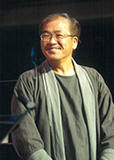
陳中申(1956),作曲家、笛簫演奏家、指揮家與音樂教育家,雲林林內人。十歲起自學笛子,畢業於臺中師專與東吳大學音樂系,曾隨陳澄雄、賴德和、馬水龍、盧炎、徐頌仁、黃曉同修習長笛、作曲與指揮。1989年創立臺北絲竹室內樂團,1992–2004年擔任臺北市立國樂團指揮,2004–2011年任教於國立臺南藝術大學。其後以自由音樂人身分持續活躍於笛簫演奏、創作、樂器改良與教育推廣。2008年研製「陳氏半音笛」,取得臺灣及中國專利,於笛簫教育卓有貢獻。1979年以笛獲台視《五燈獎》五度五關,並以簫獲全國第一。自1985年起推出個人笛簫專輯,包括《笛子與鋼琴》、《抒懷》、《笛篇》、《秀才騎馬弄弄來》、《扮仙》、《孤影》、《一個簫郎》等,皆獲得傳藝金曲獎、金鼎獎入圍及得獎肯定。代表作品有:國樂合奏曲《草螟弄雞公》(1988)、《扮仙》(1991)及國樂音樂劇《雞同鴨講》(1990)。曾獲「臺灣十大傑出青年」(1992)、「中興文藝獎音樂獎」(1998)與「國家文藝獎」(2019)。現任臺灣笛簫協會理事長。
CHEN Chung-Shen (b. 1956) is a composer, Dizi and Xiao performer, conductor, and music educator from Linnei, Yunlin. CHEN taught himself the Dizi from the age of ten and later graduated from the National Taichung Teachers College and Soochow University. He studied flute, composition, and conducting with Chen Tscheng-Hsiung, Lai Deh-Ho, Ma Shui-Long, Lu Yen, Hsu Sung-Jen, and Huang Hsiao-Tung. In 1989, CHEN founded the Taipei Folk Chamber Orchestra. He served as conductor of the Taipei Chinese Orchestra from 1992 to 2004 and taught at the Tainan National University of the Arts from 2004 to 2011. He latCHEN Chung-Shen (b. 1956) is a composer, Dizi and Xiao performer, conductor, and music educator from Linnei, Yunlin. Chen taught himself the Dizi from the age of ten and later graduated from the National Taichung Teachers College and Soochow University. He studied flute, composition, and conducting with Chen Tscheng-Hsiung, Lai Deh-Ho, Ma Shui-Long, Lu Yen, Hsu Sung-Jen, and Huang Hsiao-Tung. In 1989, CHEN founded the Taipei Folk Chamber Orchestra. He served as conductor of the Taipei Chinese Orchestra from 1992 to 2004 and taught at the Tainan National University of the Arts from 2004 to 2011. He later continued his career as an independent musician, remaining active in Dizi and Xiao performance, composition, instrument innovation, and music education. In 2008, he developed the “CHEN's semitone Dizi,” which received patents in Taiwan and China and made significant contributions to Dizi and Xiao pedagogy.In 1979, he won five consecutive rounds on TTV’s Five Lights Award for Dizi performance and placed first nationally for Xiao. Since 1985, he has released numerous solo albums—including Dizi and Piano, Sentiments, Dizi Pieces, The Scholar Rides His Horse, Ban Xian, Solitary Figure, and A Xiao Player—earning multiple The Golden Melody Awards for Traditional Arts and Music and Golden Tripod Award nominations and wins. His representative works include the Chinese orchestra pieces Grasshopper Teases the Rooster (1988) and Ban Xian (1991), as well as the Chinese musical At Cross Purposes (1990). He has received the Ten Outstanding Youth Award (1992), the Zhongxing Arts and Culture Award in music (1998), and the National Award for Arts (2019). CHEN currently serves as Chair of the Taiwan Dizi and Xiao Association.er continued his career as an independent musician, remaining active in Dizi and Xiao performance, composition, instrument innovation, and music education. In 2008, he developed the “CHEN’s semitone Dizi,” which received patents in Taiwan and China and made significant contributions to Dizi and Xiao pedagogy.In 1979, he won five consecutive rounds on TTV’s Five Lights Award for Dizi performance and placed first nationally for Xiao. Since 1985, he has released numerous solo albums—including Dizi and Piano, Sentiments, Dizi Pieces, The Scholar Rides His Horse, Ban Xian, Solitary Figure, and A Xiao Player—earning multiple The Golden Melody Awards for Traditional Arts and Music and Golden Tripod Award nominations and wins. His representative works include the Chinese orchestra pieces Grasshopper Teases the Rooster (1988) and Ban Xian (1991), as well as the Chinese musical At Cross Purposes (1990). He has received the Ten Outstanding Youth Award (1992), the Zhongxing Arts and Culture Award in music (1998), and the National Award for Arts (2019). CHEN currently serves as Chair of the Taiwan Dizi and Xiao Association.