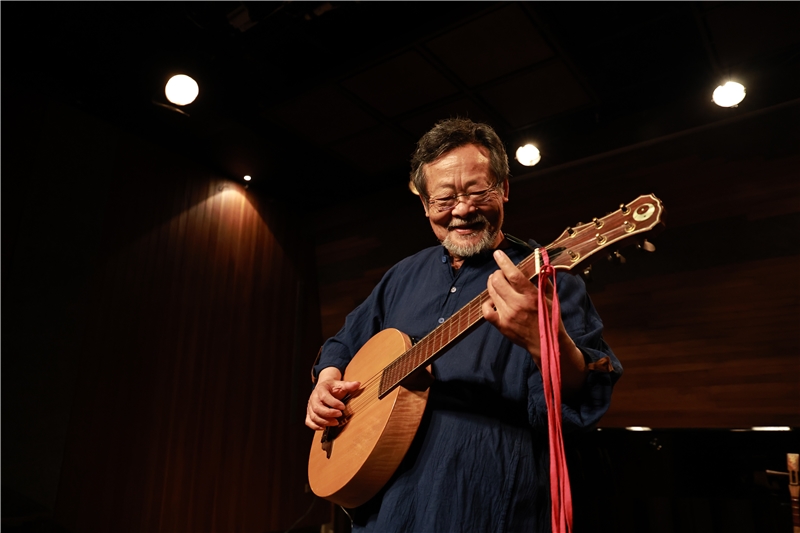
陳明章(1956)是臺灣音樂代表性的詞曲創作者、製作人、歌手以及吉他、月琴演奏家,更是少數同時獲得金馬獎、金曲獎與金鐘獎的「三金得主」。其創作領域廣泛,橫跨流行音樂、電影配樂、劇場音樂及傳統音樂再造,代表作包含〈流浪到淡水〉、〈伊是咱的寶貝〉,以及侯孝賢導演的電影《戀戀風塵》、《戲夢人生》配樂等。他的音樂學習歷程豐富多元:曾經跑遍臺灣南北學習北管、南管、恆春月琴民謠、吸收臺灣傳統音樂的精髓,並將不同的音樂風格融合運用在現代音樂之中。他也同時是臺灣月琴系統重要的研究與傳承者,2000年代以後逐步將創作重心轉往月琴系統的研究,並整理自身發展的音樂理論「陳明章二音和弦理論」、創立「台灣月琴民謠協會」,推動母語月琴民謠,更定期舉辦「臺灣月琴民謠祭」。其音樂道路從從庶民文化、歷史記憶出發,再走入當代生活,對臺灣的現代音樂發展及文化認同具有深遠的貢獻。
CHEN Ming-chang (b. 1956) is a representative Taiwanese songwriter, music producer, singer, and performer of guitar and yueqin (moon lute), and is among the few artists to have received all three major Taiwanese awards: the Golden Horse Awards, Golden Melody Awards, and Golden Bell Awards. His creative work spans a wide range of fields, including popular music, film scoring, theatre music, and the reworking of traditional music. His representative works include “Wandering to Tamsui” and “Baby of Ours,” as well as film scores for Hou Hsiao-hsien’s Dust in the Wind and The Puppetmaster. CHEN’s musical training is diverse and extensive; he traveled throughout Taiwan to study Beiguan, Nanguan, and Hengchun yueqin folk traditions, absorbing the essence of Taiwanese traditional music and integrating these elements into contemporary musical forms. He is also a key researcher and transmitter of the Taiwanese yueqin tradition. Since the 2000s, he has gradually shifted his creative focus toward the study and preservation of the yueqin system, developing the “Chen Ming-chang Two-Note Harmonic Theory,” founding the Taiwan Yueqin Folk Music Association, and regularly organizing the Taiwan Yueqin Folk Festival. His musical trajectory begins with vernacular culture and historical memory and extends into contemporary life, making a significant contribution to the development of modern Taiwanese music and cultural identity.