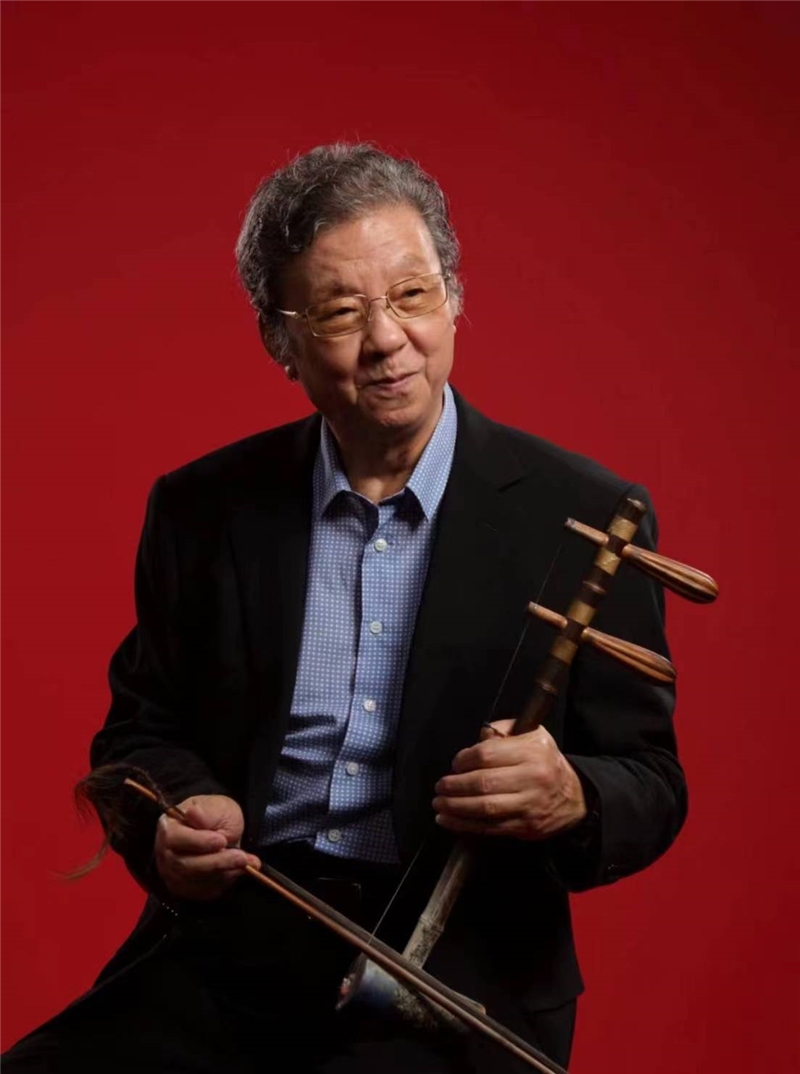
李超(1944),京劇音樂作曲家與京胡琴師,生於山東青島。其父李奘圖與兄長李門皆為梅派琴師,他自幼承庭訓,並師事蘇盛琴、羅萬金、馬寶山等名家,早年即以精湛琴藝聞名。曾任中國京劇院國家一級琴師,長期為梅派名旦杜近芳、老生袁世海等人的專職琴師,演奏風格嚴謹凝鍊、以情帶唱,尤以梅派藝術造詣深厚。1990年代中期應國光劇團之邀來臺指導,2003年定居臺灣並任音樂指導,推動京劇音樂創作與教育發展。其後創作多部新編京劇作品,融合傳統聲腔與現代表現形式,形塑「臺灣京劇新美學」風格。2015年獲臺北市文化局登錄為「傳統表演藝術保存者」,並致力研製環保京胡,以實踐藝術革新與永續理念。李超長年深耕戲曲音樂,兼具琴師、作曲家與教育者身分,為當代臺灣京劇音樂的重要推動者。
LI Chao (b. 1944) is a Peking opera composer and jinghu (Peking fiddle) musician from Qingdao, Shandong. His father Li, Xiang-tu and elder brother Li, Men, both masters of the Mei school, and later studied with distinguished jinghu artists such as Su, Sheng-qin; Luo, Wan-jin; and Ma, Bao-shan. Early in his career, he gained recognition for his refined musicianship and emotional sensitivity in accompaniment. LI served as a first-rank jinghu player at the China National Peking Opera Company, accompanying legendary performers such as Du, Jin-fang and Yuan, Shi-hai. His performance style is known for its precision, solid technique, and expressive phrasing, particularly in the Mei school tradition. In the mid-1990s, LI was invited to Taiwan by the National Guoguang Opera Company, where he settled in 2003 as music director. He has since composed and arranged numerous new-style Peking operas that integrate traditional melodic structures with contemporary aesthetics, forming what critics describe as the “New Aesthetic of Taiwanese Peking Opera.” In 2015, he was recognized by the Taipei City Government as a Preserver of Traditional Performing Arts and has promoted the development of eco-friendly jinghu instruments. As a performer, composer, and educator, LI Chao continues to play a vital role in the advancement of Peking opera music in Taiwan.