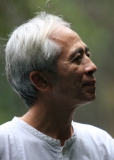
林谷芳(1950),音樂家、文化學人、禪者。出生於新竹。1968年入臺灣大學人類學系。生涯前期以音樂而為人知,中期角色聚焦於文化評論與藝術學建構,後期更以禪家修行景從者眾。於音樂文化之建構,廣及於音樂美學之重建、音樂評論之寫作、音樂演出之製作、音樂作品之編纂等。年輕時,因於對生命與藝術之觀照而深入中國音樂,並以修習琵琶作為對此文化美學的直接印證,其琵琶學生更佔有後來臺灣琵琶家極大比例;之後又轉身致力於中國音樂之評論與詮釋工作。1996年完成《諦觀有情 — 中國音樂裡的人文世界》,為系統性的詮釋傳統中國音樂美學之著作,被公認為具歷史性意義的著作,對中國音樂、茶界乃至禪門皆具一定影響。其跨界角色既及於諸多領域,又始終關聯文化建構與生命修行,為提升中國音樂之關鍵性人物。
LIN Gu-Fang (b.1950) Musician, cultural scholar, and Zen practitioner. Born in Hsinchu, Lin entered the Department of Anthropology at National Taiwan University in 1968. He was first recognized for his musical expertise; in mid-career, his focus shifted toward cultural criticism and the construction of artistic theories; in his later years, he became a widely followed figure in Zen cultivation.His contributions to musical culture span the reconstruction of music aesthetics, criticism, performance production, and the compilation of musical works. In his youth, his insights into life and art led him deep into Chinese music, using the pipa as a medium to embody this cultural aesthetic. His former students now comprise a significant portion of Taiwan’s leading pipa players. Later, he turned his efforts toward the commentary and interpretation of Chinese music. In 1996, he completed Watching the World with Equanimity: The Humanistic World of Chinese Music, a systematic interpretation of traditional Chinese music aesthetics. Recognized as a landmark work, it has profoundly influenced the fields of Chinese music, tea culture, and Zen Buddhism. Spanning multiple disciplines while remaining rooted in cultural construction and spiritual practice, Lin remains a pivotal figure in the elevation of Chinese music.