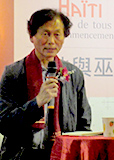
明立國(1952生),民族音樂學者。出生於花蓮縣鳳林鎮。父母親喜愛聽平劇,引導他欣賞音樂,並對學習樂器產生濃厚的興趣。大學時期,明立國向演奏家李世登學習吉他,並且與李哲洋、呂炳川等音樂界前輩時常互動和討論音樂藝術,於是1979年成立比較音樂學會。1980年大學畢業後,全心投入臺灣在地音樂研究;1983年參與文建會委託之阿美族音樂調查研究計畫,展開對於阿美族歌舞音樂的深度研究。1990年代起,明立國身兼臺灣原住民音樂研究者、記錄者、演出者等多重身份。1996年取得香港中文大學民族音樂學碩士。曾多次主持大型臺灣原住民之國家文化研究計劃,並擔任大型藝文展演製作暨主持人。現任南華大學民族音樂系專任副教授暨通識教育中心主任,對臺灣原住民音樂研究貢獻良多。
Ming Li-kuo, born in 1952 in Linfong, Hualien, is a thenomusciologist with a long-term dedication to research in indigenous tribal music in Taiwan. Since she graduated from Tamkang University in 1980, Lin has fully devoted himself to studying local music in Taiwan. In 1996, he received MSc in Musicology from the Chinese University of Hong Kong. Ming has led many national cultural research projects on indigenous peoples in Taiwan and served as producer/master of ceremony of large-scaled art and cultural performances and exhibitions. Ming is currently full-time Associate Professor of Department of Ethnomusicology and Director of General Education, Nanhua University.